Charles-Edouard Jeanneret, more commonly known as Le Corbusier (1887-1965), was a 20th century Swiss architect, artist and designer. Le Corbusier's influence spans well beyond his lifetime with his innovations and ideals still shaping modern urban planning and design today. He elevated the perception of furniture from being purely functional to an art object through his innovative, minimal design, creating decorative art without decoration.
Le Corbusier created his furniture for the houses he designed, valuing functionalism while incorporating elements of expressionism. His designs were characterised by their clean lines, geometric shapes and distinct materials such as steel and leather.
Le Corbusier worked alongside Charlotte Perriand and his cousin Pierre Jeanneret as a trio to create new, timeless design icons. They set out to create modern versions of traditional club chairs, which would be fit for “conversation, relaxing and sleeping.”
Today this style is very popular, with his LC armchairs, lounge chairs and dining tables performing highly at auction. This article will explore 3 iconic chairs designed and produced by Le Corbusier, alongside Charlotte Perriand and Pierre Jeanneret.
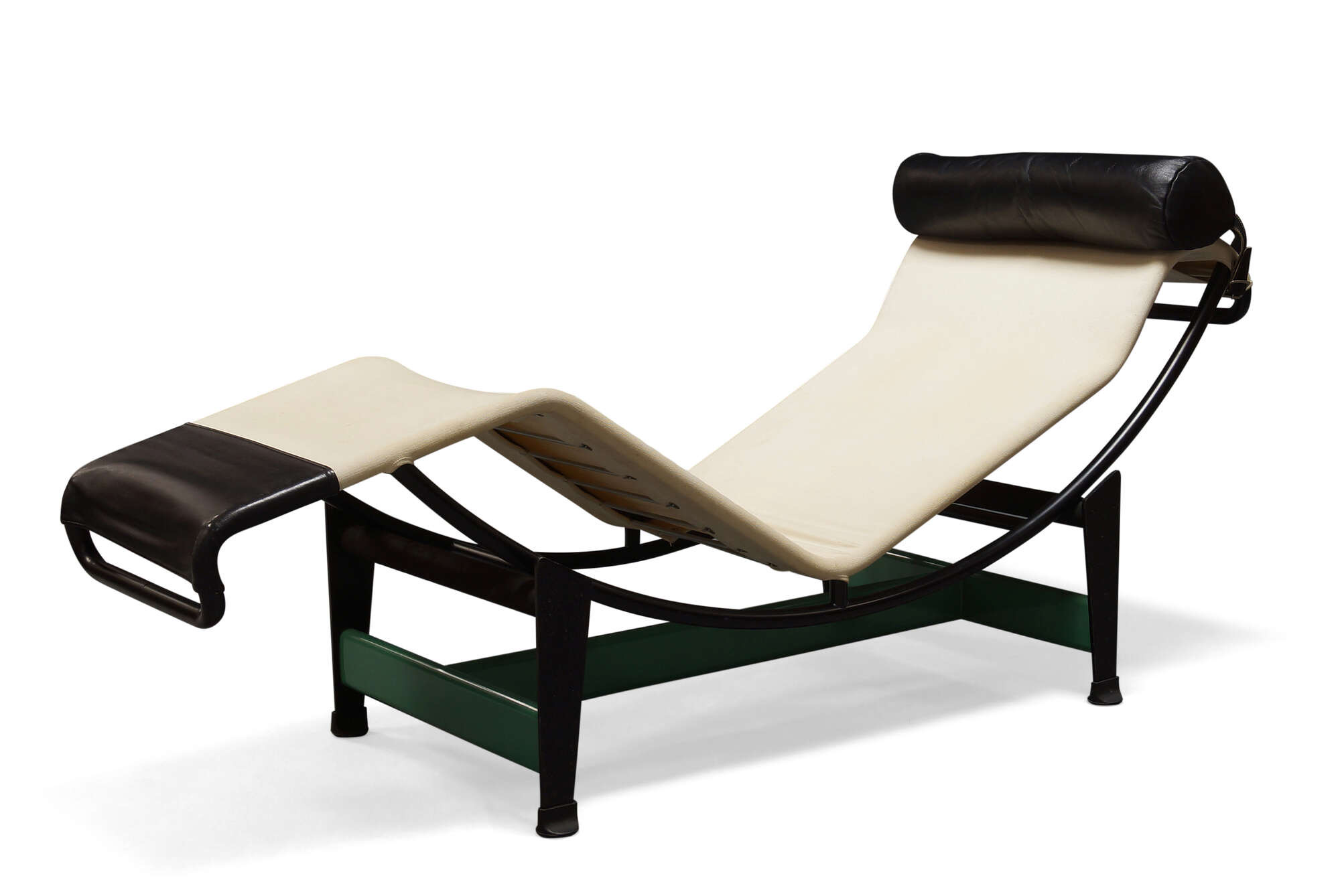
Lot 177: After Le Corbusier, Pierre Jeanneret & Charlotte Perriand, a limited edition LC4 chaise...
Price Realised: £1,495
The LC4 Chaise Lounge 9 (Lounge Chair)
The LC4 made its debut at Paris’ Salon d’ Automne in 1929, a year after it was designed. Le Corbusier envisioned furniture as an extension of the human body, like a machine, that adapts to the shape of the body. It consists of two main components; a stationary base and an adjustable upper frame to find the perfect position. In 1929, the ‘simple’ design was produced as équipement intérieur d’une habitation, “a machine for relaxation” in the modernist aesthetic of Le Corbusier.
“While our chair designs were directly related to the position of the human body… they were also determined by the requirements of architecture, setting and prestige” – Charlotte Perriand
The LC2 Grand Confort Petit
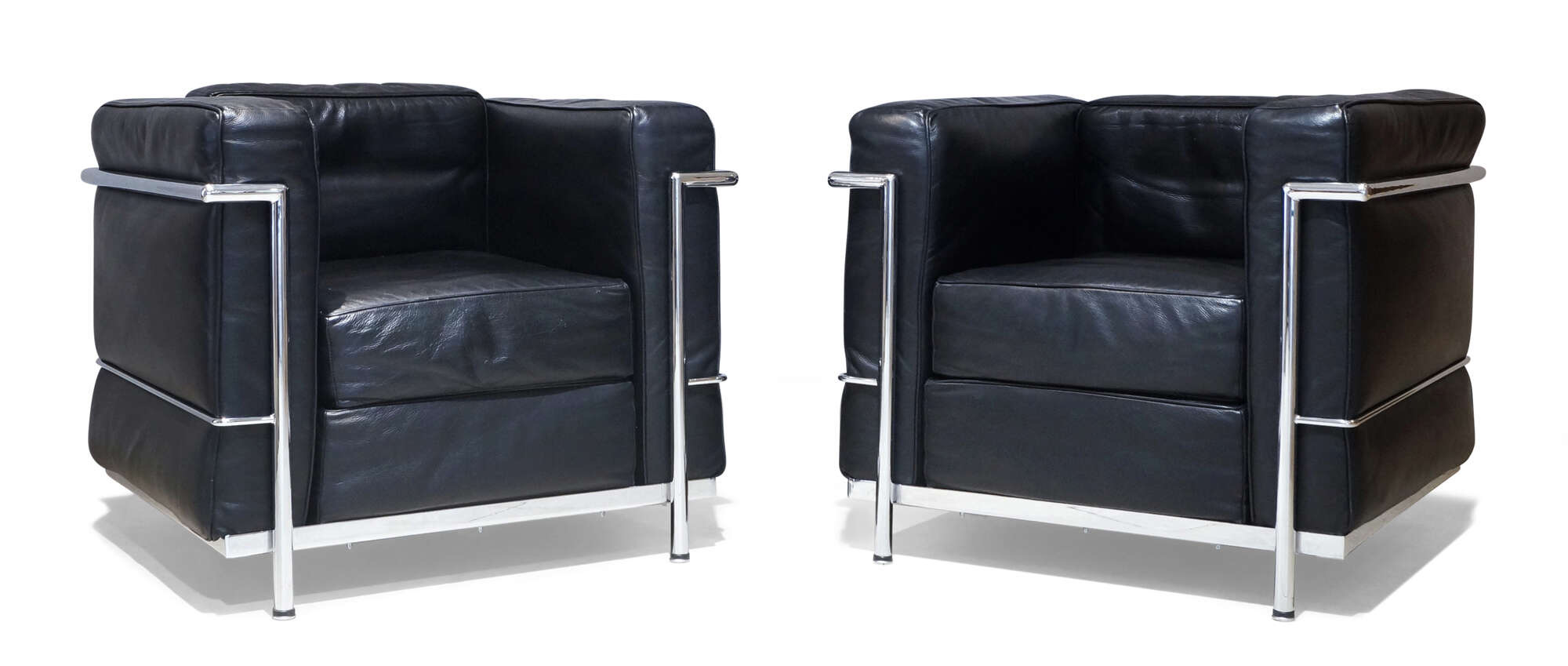
Lot 185: Le Corbusier, Pierre Jeanneret, and Charlotte Perriand for Conran, Pair of 'LC2'
Price Realised: £3,250
The well-known LC2 Grand Confort, petit modèle, was designed in 1928 and presented at the Salon d'Automne in 1929, based on the notions of his famous book, The Decorative Arts, which explains how furniture must accommodate human needs as well as look inviting.
The LC2’s design prioritised comfort with its padded cushions that cover the chair. This cubic aesthetic is based on the steel tube frames and soft cushions also necessary for upholding the structure, in direct contrast to traditional armchairs of the period with internal frames. The artists often referred to these as cushion baskets.
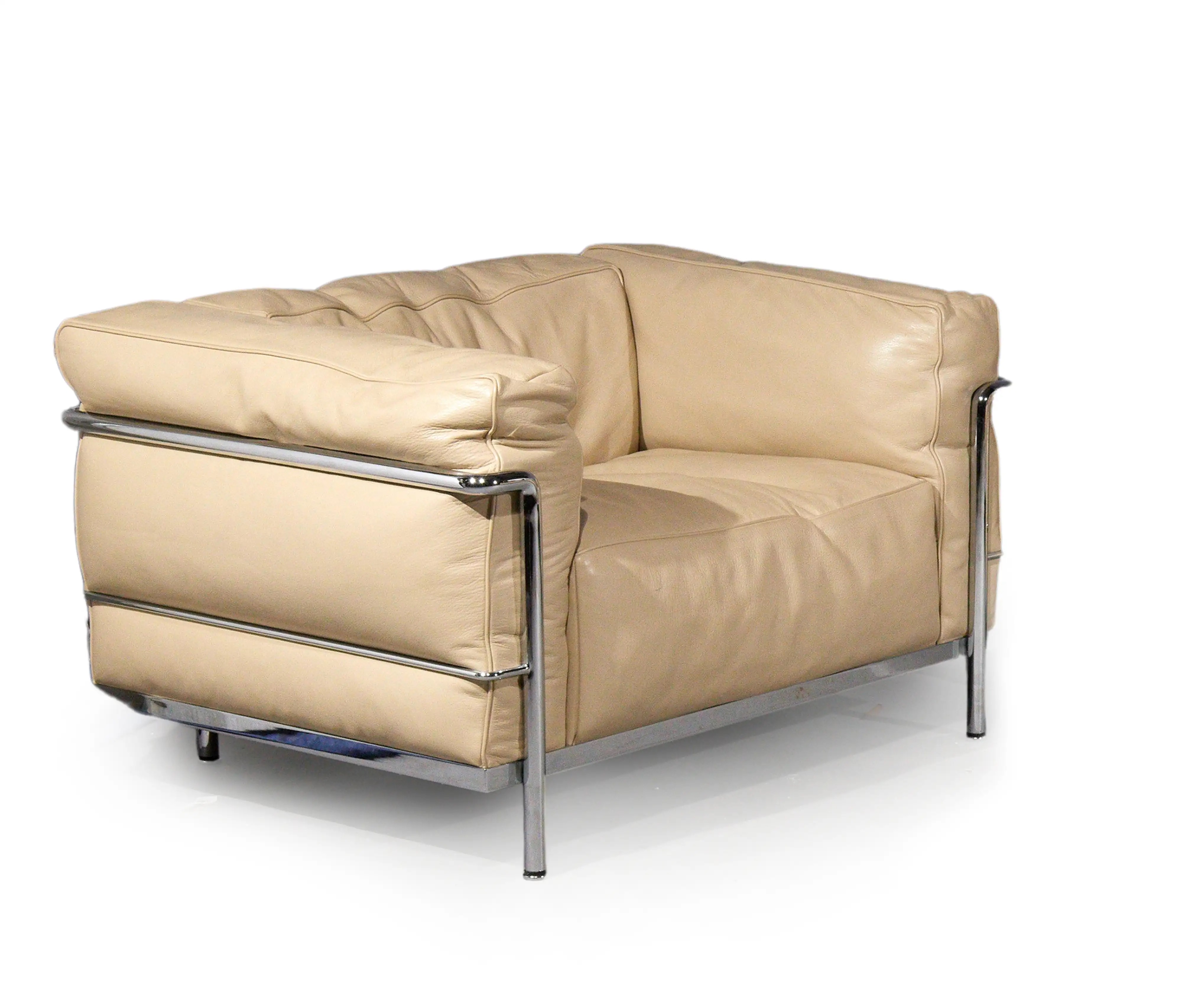
Lot 1126: Le Corbusier, Swiss/French 1887-1965, Charlotte Perriand, French 1903-1999 & Pierre Jeanneret
Price Realised: £2,230
The LC3 Grand Confort
The LC3 Grand Confort, grand modèle, was created to be wider than the LC2 model to favour those who tend to sit with their legs crossed, in a diagonal line, unlike the petit modèle, created for those who sit straight with their legs apart. Like the LC2, the LC3 is made of steel tubing surrounding the leather, polyurethane cushions, filled with feather down to maximise comfort.
Today, these chairs and sofas are still used in residential homes and workplaces and are made and sold by CASSINA, the same way they were originally made. Many 20th century designers would argue that the LC3 is one of the most iconic mid-century designs for its seamless blend of function, comfort and sleekness.
Le Corbusier's Collaboration with CASSINA
Cassina is the only company authorised with worldwide production rights of the LC Le Corbusier furniture.
Cassina is an Italian design firm, established in 1927 by brothers Cesare and Umberto Cassina, that specialises in high-end, innovative designer furniture. Cesare Cassina was introduced to Heidi Webber, detainer of production rights for the LC Collection at the time, by entrepreneur Dino Gavina and soon after the company acquired rights for the production of their first four models through a contract, signed on October 26th 1964, by Le Corbusier and co-authors, which sparked the start of the revolutionary Cassina | Maestri Collection.
How to tell an original from an imitation
As Le Corbusier furniture is highly in demand, many companies remake duplicate designs and try to present them as authentic. Here's how to spot the difference.
- Original - Bent curvature of the steel tubes using a special welding technique
- Dupe - Very angular looking curves of the tubes
- Original: Smooth and polished seams
- Dupe: Welding done carelessly (not smooth or polished)
- Original: Cushion made of foam core and padded for softness
- Dupe: Rough/stiff padding
- Original: All items are branded with the Cassina|Maestri logo
- Dupe: No brand logo
- Original: Leather used is velvety, soft and durable
- Dupe - Rough leather and processed looking
Le Corbusier at Auction
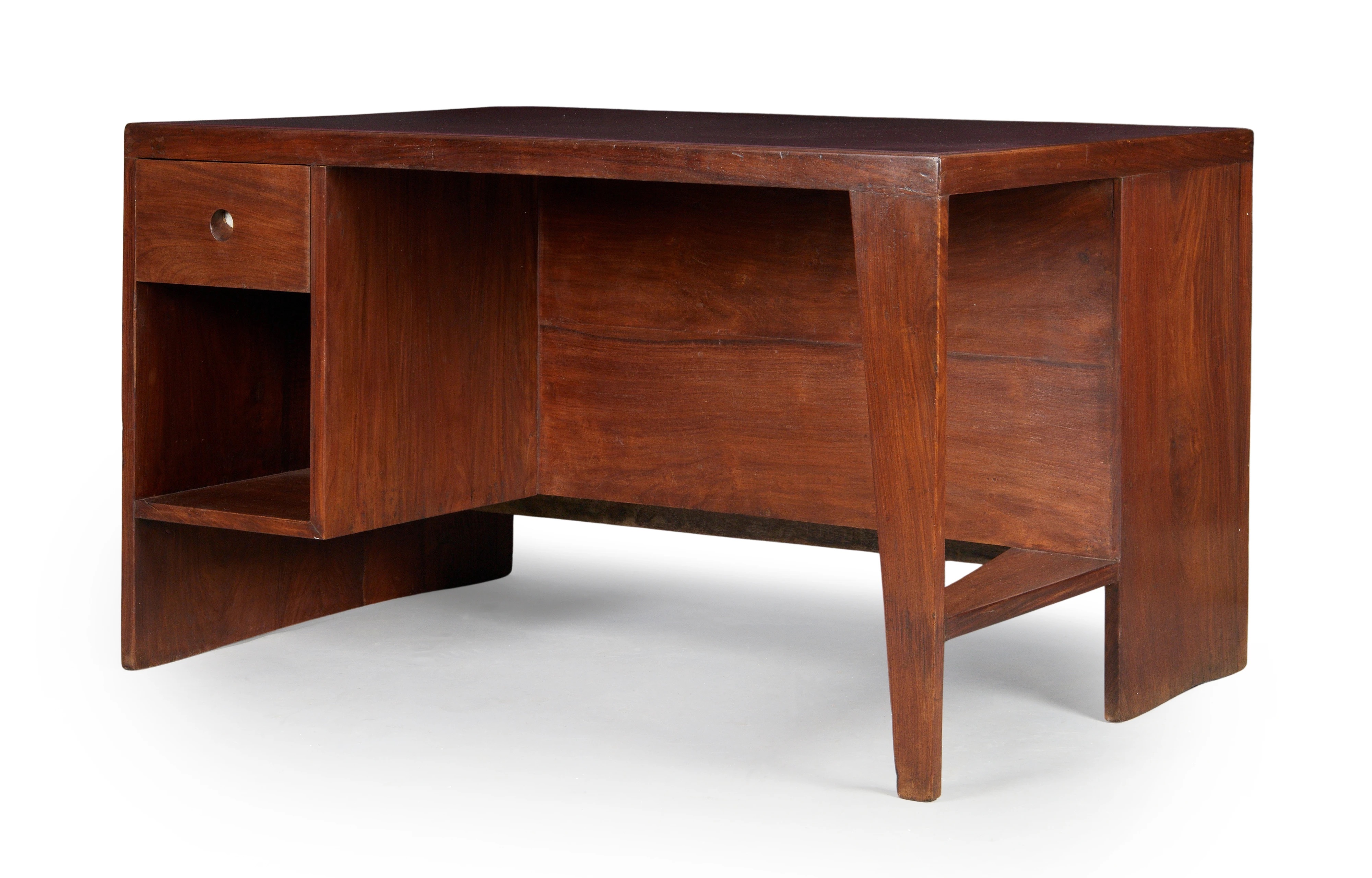
Lot 1: Pierre Jeanneret (1896-1967), Desk designed for the Administrative buildings, Chandigarh, North India
Price Realised: £9,840
Le Corbusier's work was ranked 209th in the top 500 world ranking of best selling artists at auction*. In Roseberys’ November 2024 Design auction, an LC3 lounge from Pyms Gallery was estimated to sell for £1,500-£2,000 and sold for £2,230.
In Roseberys' February 2025 Design auction, a desk designed by Pierre Jeanneret for the Administrative buildings in Chandigarh, North India was estimated to sell for £2,000-£2,500 and sold for £9,840, highlighting the demand of products designed in the fashion of the LC Collection.
When Le Corbusier became Chief Advisor of the Chandigarh Project, he convinced Jeanneret to take a full-time position with him. Jeanneret was strongly influenced by local materials and craftsmanship, with a modernist twist, and built designs accordingly. He designed numerous civic buildings, hostels, residential homes, schools, and university buildings. Jeanneret’s collaborative designs helped to establish a new localised aesthetic for this city.
Functional and aesthetically harmonious, Le Corbusier and Jeannerets’ designs are considered 20th century masterpieces, and ‘Chandigarh’ pieces are highly collectable.
By Alexia Domingo
• According to ArtPrice.com

 Newsletter Signup


 Newsletter